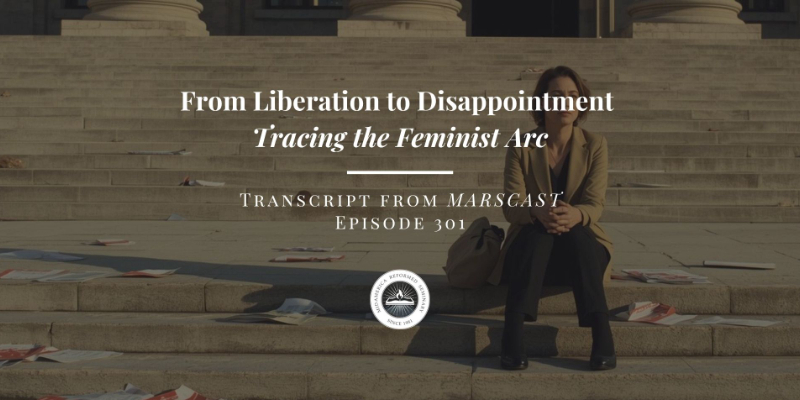
Feminism promised women liberation, but what if it's the thing that's actually breaking them?
This article is adapted from the June 2022 issue of The Messenger.
In the first place, Mid-America needs a president who is acquainted with its unique identity, as well as its biblical and confessional commitments. In order for Mid-America to enjoy the continued support and loyalty of its supporting constituency, the new president needs to be enthusiastically and wholeheartedly committed to the core values of the institution: a high view of the authority and infallibility of the Bible, the conviction that the historic creeds and confessions of the Reformed churches constitute a subordinate standard for the Seminary’s classroom instruction and teaching, and a resolve to serve the churches by providing the students with a classic theological curriculum that furnishes them for the office of the ministry of the Word and the sacraments. The Board of Trustees and the Seminary’s constituency desire a President who enjoys their confidence in these respects and is an articulate and trustworthy proponent of the institution’s core commitments.
In the second place, Mid-America needs a president who enjoys the respect of his faculty colleagues, and who is competent to teach within the framework of the Seminary’s long-standing commitment to an integration of classroom instruction and pastoral formation through the Ministerial Apprenticeship Program. The president must be a competent administrator who works collaboratively with the faculty and staff. But even more importantly, he must be a pastor-theologian who can competently contribute to the Seminary’s aim to furnish its students with a rigorous theological curriculum and an equally thorough preparation for the ministerial dimensions of pastoral ministry in the churches.
And in the third place, Mid-America needs a president who can lead the institution at a particularly important moment in its history. In recent years, Mid-America has experienced an increase in student enrollment, launched a Center for Missions and Evangelism (CME), and embarked upon a program of expanding the Seminary’s facilities to meet a number of anticipated needs. The expansion of the Seminary’s facilities includes a significant expansion of the Seminary’s library, the addition of a new classroom auditorium, the provision of additional office and conference space, and possibly the building of on-site student housing. In order for these initiatives to be successful, the new president will be required to work collaboratively with the office of advancement in soliciting the monies required to achieve these goals. In particular, the new president will need to be an enthusiastic proponent of the CME, assisting the Director in representing it to the Seminary’s constituents and securing their partnership in realizing its goals. Although the profile of what Mid-America needs in a new president at this moment in its history may seem daunting, I would like to emphasize how these needs represent a unique opportunity for enlarging and enriching the Seminary’s service to the churches. I cannot remember a time in my thirtyplus years of service at Mid-America that was as encouraging for the Seminary’s future as the present moment. The next president of Mid-America will not embark upon his service to the school in a period of decline, but in a time of expansion and growth. What the school desires to find in a new president is a servant-leader who comes to the institution, not to be an agent of radical change and re-ordering of priorities, but to be a visionary proponent of the Seminary’s longstanding commitment to a combination of classical theological formation in the basics of biblical and Reformed theology and ministerial formation for fruitful service in the ministry of the gospel in the church.

Dr. Cornelis Venema serves as the President of Mid-America Reformed Seminary, as well as a Professor of Doctrinal Studies.




 229 Seminary Dr. Dyer, IN 46311